
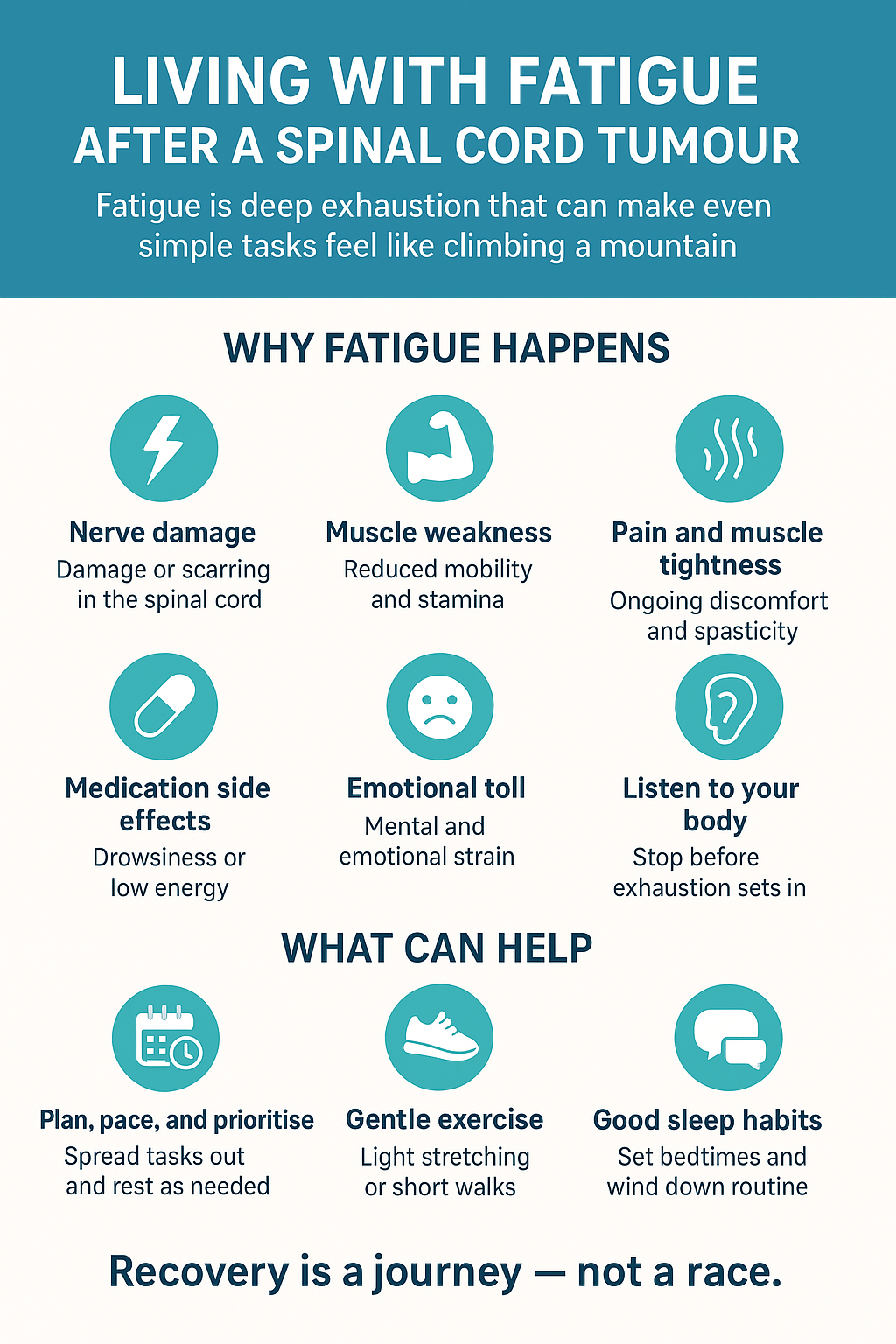
For many of us who have had a spinal cord tumour, fatigue is one of the most stubborn and invisible challenges we face. It’s not just being “a bit tired”; it’s the kind of deep exhaustion that can make even simple tasks feel like climbing a mountain.
In my own experience, this fatigue can arrive without warning. One day I’m doing okay, the next I feel like my body has hit an energy wall. It can happen during the same day too. It’s not laziness or lack of willpower. It’s a real and physical consequence of what the spinal cord has been through.
Why Fatigue Happens
There are several reasons fatigue can linger long after the tumour is gone:
- The nervous system is working harder – Damage or scarring in the spinal cord means that sending signals from the brain to the body takes more effort. Even moving around your home can feel like a workout.
- Muscle weakness – Reduced mobility means muscles lose strength and stamina, so they tire more quickly.
- Pain and muscle tightness – Living with discomfort or spasticity uses up a surprising amount of energy.
- Medication side effects – Painkillers, muscle relaxants, or other drugs can contribute to daytime drowsiness.
- The emotional toll – Recovery is as much mental as physical, and dealing with uncertainty, frustration, or loss can drain your reserves.
What Helps Me (and Might Help You)
- Everyone’s fatigue is different, but I’ve learned a few things along the way:
- Plan, pace, and prioritise – I spread tasks out through the day and don’t feel guilty for resting when I need to.
- Gentle movement – Light stretching or short walks (with crutches in my case) keep my muscles active without wiping me out.
- Good sleep habits – I stick to a certain bedtime and try to wind down before bed, even if my sleep isn’t perfect.
- Listen to your body – I stop before I’m completely exhausted, which means I recover faster and can do more over time.
Living with fatigue isn’t easy, but learning to work with it, rather than against it, makes a big difference. It’s about giving yourself permission to rest, celebrating what you can do, and remembering that recovery is a journey, not a race.