
Not everyone has surgery for their spinal cord tumour. As each case is very much individual and how it is subsequently treated. If you did have surgery like myself, followed by radiotherapy, then you may have experienced nerve damage as a result. Again, how you recuperate post operative is very much an individual medical case. In my case it was over twenty years, and surgical options and recovery have advanced. However, we can still all suffer some sort of nerve damage in the spinal cord that radiates out to the rest of the body, whether that is a temporary or permanent effect.
In my case I have fluctuating sensations and motor responses in my legs which causes me walking difficulties and thereby I use crutches to support me. The unpredictability of this is quite common in spinal cord tumours and recovery. Here’s why.
- Disrupted but Not Severed Pathways
In an incomplete SCI, some nerve pathways are still intact, but they may be damaged or functioning irregularly. That means:
- On good days, signals may pass through more clearly, leading to better sensation, strength, and even pleasurable feelings.
- On bad days, inflammation, fatigue, posture, or even stress can further impair those pathways, making signals feel distorted, delayed, or absent.
- Nerve Misfiring and Plasticity
The spinal cord and nervous system are trying to reorganize and adapt (a process called neuroplasticity), but that can sometimes cause:
- Ectopic signals: nerves firing inappropriately, leading to strange sensations like tingling, buzzing, or discomfort.
- Spasticity or weakness: irregular motor neuron activity causing inconsistent strength and coordination.
- Autonomic Nervous System Involvement
The autonomic system can be thrown off, especially if there’s damage affecting communication between the brain and spinal cord. This can:
- Impact blood flow or muscle tone in your legs.
- Cause that “good” or “bad” leg feeling based on circulation, pressure, or even temperature changes.
- External Triggers
Things like:
- Fatigue
- Infections
- Weather/temperature
- Mental health
- Positioning/posture
can all cause noticeable fluctuations in your nerve function.
- Medication or Therapy Effects
If you’re on muscle relaxants, nerve pain meds, or doing physiotherapy, these can have both good and side-effect-laden impacts on nerve signaling and muscle tone. Regular, controlled movement and exercise can contribute to improving nerve function and muscle responsiveness over time.
Here’s how gentle exercises might help:
1. Improving Circulation
Gentle exercises like stretching or range-of-motion (ROM) exercises can increase blood flow to your legs and muscles, which can reduce feelings of weakness or unresponsiveness and improve overall sensation. When blood flow is optimized, your nervous system is better able to function.
2. Enhancing Neural Plasticity
When you do gentle exercises, you’re helping your brain and spinal cord reorganise and adapt (neuroplasticity). By repetitively moving your legs, you’re giving your nervous system signals that can promote recovery or at least improve consistency in how your nerves function.
3. Reducing Spasticity
Certain exercises, like gentle stretching and flexibility routines, can help manage spasticity, a condition where muscles tighten uncontrollably. This can reduce some of the strange sensations and discomfort you might feel. For example, controlled stretches and resistance exercises can help calm spasms.
4. Building Strength and Stability
Even if you can’t fully control the muscles in your legs, gentle strengthening exercises—like isometric contractions or supported movements—can help activate remaining muscle groups and provide more stability. This may help with those days when your legs feel weak or unresponsive.
5. Enhancing Proprioception
Gentle weight-bearing exercises or activities where you’re moving in space (even seated exercises or assisted standing) can help you regain a sense of where your legs are in space (proprioception). This can make your movements feel more predictable and less “strange.”
6. Preventing Atrophy
Keeping your legs moving regularly helps prevent muscle atrophy (wasting) and joint stiffness, both of which can make it harder to move or feel your legs properly. This might help reduce the unpredictability of muscle strength and sensations.
There are other techniques that you may wish to use such as Mindfulness and Relaxation Techniques. Mindfulness and deep relaxation practices can help you reduce the impact of unwanted or unpredictable sensations:
- Mindful awareness: Focusing on your breath and staying present can help redirect your attention away from sensations that feel strange or uncomfortable. By observing the sensations without judgment, you may reduce the intensity or emotional reaction to them.
- Progressive muscle relaxation: This technique involves systematically tensing and relaxing muscle groups in your body to release tension. Doing this in your legs may help calm any spasticity or discomfort.
- Guided imagery: Imagine your body in a relaxed, calm state where everything feels aligned and controlled. This can promote a sense of stability and reduce abnormal sensations.
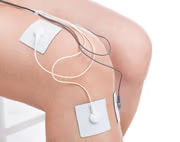
Over the past year I have been using Functional Electrical Stimulation in an attempt to “jump start” certain muscles that are weaker for me, such as my gluteal & quadricep muscles.
FES involves using electrical pulses to stimulate muscles, causing them to contract. The electrical impulses are typically delivered through electrodes placed on the skin over the muscles. These impulses mimic the natural signals that would be sent from the brain to the muscles, promoting movement and strengthening.
How FES Can Help with Weak or Heavy-Leg Muscles:
- Stimulating Muscle Contraction
When nerves are damaged in an SCI, they can no longer transmit signals from the brain to the muscles effectively. FES bypasses this issue by directly stimulating the muscle fibres, helping them contract. Even if the brain cannot send the signals, the muscles can still respond to the electrical impulses, which is especially helpful for improving muscle strength and function in your legs.
- Reducing Muscle Atrophy
If muscles aren’t used regularly, they can become weaker or atrophied (shrunken and less functional). FES helps activate muscles and maintain their strength, which can prevent or reverse some muscle wasting. By strengthening the muscles that aren’t getting proper signals from your nervous system, FES can help maintain or improve muscle mass, making the legs feel lighter and more functional over time.
- Improving Muscle Tone and Reducing “Heavy” Feeling
A “heavy” feeling in the legs often comes from muscle stiffness (spasticity) or poor circulation. FES can help by relaxing overactive muscles and improving circulation.FES can promote the relaxation of spastic muscles and reduce tightness, which might reduce that heavy feeling in your legs.
- Enhancing Circulation
Electrical stimulation not only strengthens muscles but also helps improve blood flow. This can be particularly beneficial if you experience poor circulation or swelling in your legs, which could contribute to the heavy feeling. Better circulation helps flush out waste products like lactic acid, reducing muscle fatigue and soreness, which can make your legs feel lighter and more responsive.
- Improving Functional Movement
FES can be used to facilitate functional movements such as walking (with support) or standing, even if the brain can’t directly control the legs. By stimulating the appropriate muscles in the right sequence, FES can help improve coordination and movement. Over time, this can help you regain some functional independence and make your legs feel more responsive and capable of movement.
- Improving Proprioception
Proprioception refers to your sense of where your limbs are in space, and it can be diminished after SCI. FES can enhance proprioception by activating muscles in a way that feels more natural, giving you a better sense of where your legs are and how to move them.
Practical Considerations:
- Customisation: FES devices can often be adjusted in terms of intensity, frequency, and duration of stimulation. A healthcare professional, such as a physical therapist, can help you find the settings that are most effective for you.
- Duration and Frequency: The benefits of FES are cumulative, so consistency is key. Over time, regular use can help improve muscle strength and reduce the “heavy” feeling in your legs.
Things to Keep in Mind:
- Discomfort: Some users find the sensation of FES to be strange or mildly uncomfortable at first, but it should not be painful.
- Skin Care: You should monitor the areas where the electrodes are placed to avoid irritation or pressure sores.
If you haven’t already, I recommend discussing FES with your physical therapist or doctor. They can help you determine whether FES would be a good fit for you and help guide you in setting up a treatment plan.