
I had an astrocytoma C4-C6 spinal cord tumour removed back in 2001, when I was aged twenty-seven. Without going into all the details, I was left with weakness in both legs, particularly my right, trunk instability and a weakened right hand. I have also suffered from several types of nerve pain problems, sensations of heaviness and tightness in my legs and lower back/trunk, as well as bouts of fatigue.
Over the years I have got back to a “normal” life but always had to use walking aids. My walking distance has been extremely limited. I have never accepted this; only because my nervous system can sometimes be good and I feel I can and do walk much better, but then it can go what I call “haywire” and I struggle. There is no reason; it just the nerves I say to myself but that is so frustrating. Combined with the neurosurgeon saying to me after my operation that I should make a full recovery just exacerbates the frustration. When I have asked in the past “why not” I get a shrug of the shoulders from any consultant seen with the usual reply “that’s the nervous system for you, signals misfiring, scar tissue must be causing signal blockage etc.”
During the pandemic I started to feel my mobility deteriorate. I think due to getting older, but also a lack of exercise, getting out less due to the restrictions and working from home too was limiting my interactions. I also went through a painful relationship breakup which did not help mentally. My foot drop got worse as did the sensations of tightness and heaviness. At the same time, I also lost motivation to keep exercising. I tried differing my pain medication, but nothing was changing. My GP isn’t very informed to be honest and, despite being signed off from the neuro centre, I do still have access to a spinal nurse. Unfortunately, their response was simply to try more physiotherapy, but good luck with that after the pandemic!
In early 2022 I came across a private physiotherapy company near me that specialised in neuro rehabilitation. The concept of neuroplasticity is now a popular concept whereby research has shown that intensive repetitive movements can re-wire nerve signals to find alternative nerve routes, to then stimulate and strengthen those muscles that are weaker.
I went to see them at their gym premises and had a tour to look at the equipment they use and to discuss what their 80-hour intensive programme involved over 7 weeks. Of course, they could not guarantee results and did caveat that, due to the length of time since my injury [operation], I would always need one walking aid. However, it was the “what if?” I did not try it to see if it did work for me that persuaded me to sign up.
I did not start the programme until March 2023 due to work commitments and saving up the £6000 programme fee. I was lucky working for the civil service to get 7 weeks paid and unpaid leave. I chose the 3-day programme of 3 days a week at 5 hours a day with an hour for lunch and breaks. I had recently turned fifty and thought now was the right time.
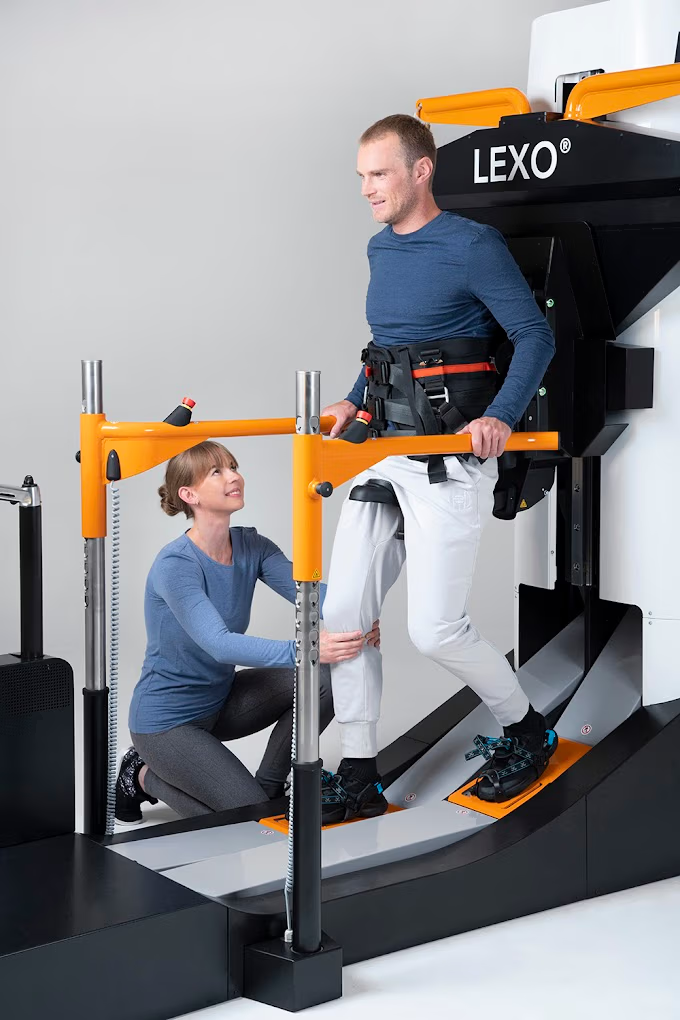
The programme consisted of an hour’s typical physiotherapy, up to1 hour on a walking machine, where you are strapped into a harness and your feet in skis, and you then follow walking patterns on an animated screen. The other two hours consisted of other treatments using other machines they had using animated screens and games designed to move your muscles; for instance, to move lifts up and down on a screen or fire an arrow at a bullseye.
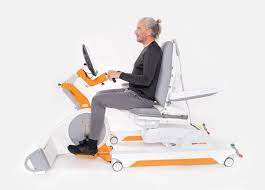
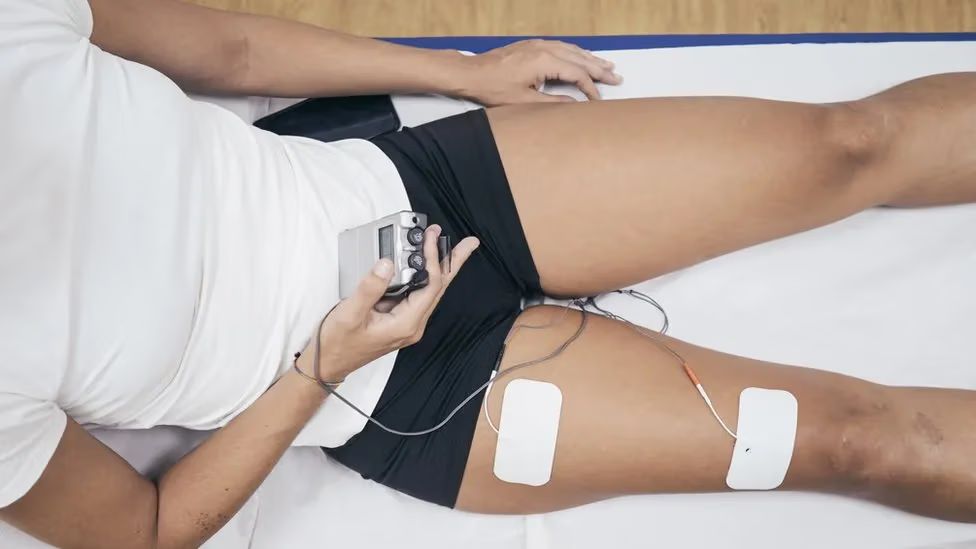
The programme also introduces you to Electrical Muscle Stimulation, or EMS as it is known, whereby electrical pads are attached to those weaker muscles with electrical impulses sent through to those muscles to cause contractions. The aim is akin to jumpstarting the nerve signals to those affected muscles. A bit like you would to a car with a flat battery. This would be done passively or rather using say an exercise bike to actively use those muscles. My main weakness muscles are in my quads, hips, abdominals, and the weakest the gluteal muscles.
The EMS focused on my quads, my glutes and the nerve below your knee that stimulates your foot to rise when stepping. I also had work on my right hand using certain machines to strengthen and improve the dexterity as my hand function has declined over the past years to the point where I now struggle to write any more than a few words whilst gripping a pen.
Surprisingly, I managed to attend every session bar one as I thought I may struggle with pain, muscle soreness or tiredness. I think attending day on and day off helped and then not doing anything too strenuous on my rest days or weekends for that period helped. However, it did not achieve my goal of walking unaided with just one stick for support. That was disappointing and not simply for the money spent but the excitement I had of thinking what if this works.
Don’t get me wrong it was not a failure nor waste of time and money. My right knee is much straighter as a result, I have a better walking gait and my foot drop has improved to an extent due to trying and using different orthotic foot devices, of which I was not aware of previously.
The team there were really supportive too and helped with explanations and different techniques. I have had less pain too, but I think that also down to trying Duloxetine for nerve pain [ future blog article] and increased motivation to continue exercising, especially using EMS at home.
Neuroplasticity achievement takes hundreds of hours of repetition and not just the bespoke 80 hours that research suggests is a minimum. It is an individual response and in the back of my mind I always felt any obstacle would be how my nerve signals would respond. Certain days they ‘behaved’ themselves and I would have a great session. Other times I would turn up with my legs dragging, feeling too heavy to lift and I would struggle to manage the four hours each day.
Unfortunately, that never changed and has not since, but it at least ticked off mentally that I tried it and gave me the motivation to continue trying.
As the words of each physiotherapist I have seen over the years is, and especially as you get older, “use it or lose it!” I am quite a stubborn independent person and, as much as my condition can get me down at times, my resilience is my strength. To someday I still hope of achieving my goal of walking independently again, even twenty odd years later, well for me that keeps me going and trying!
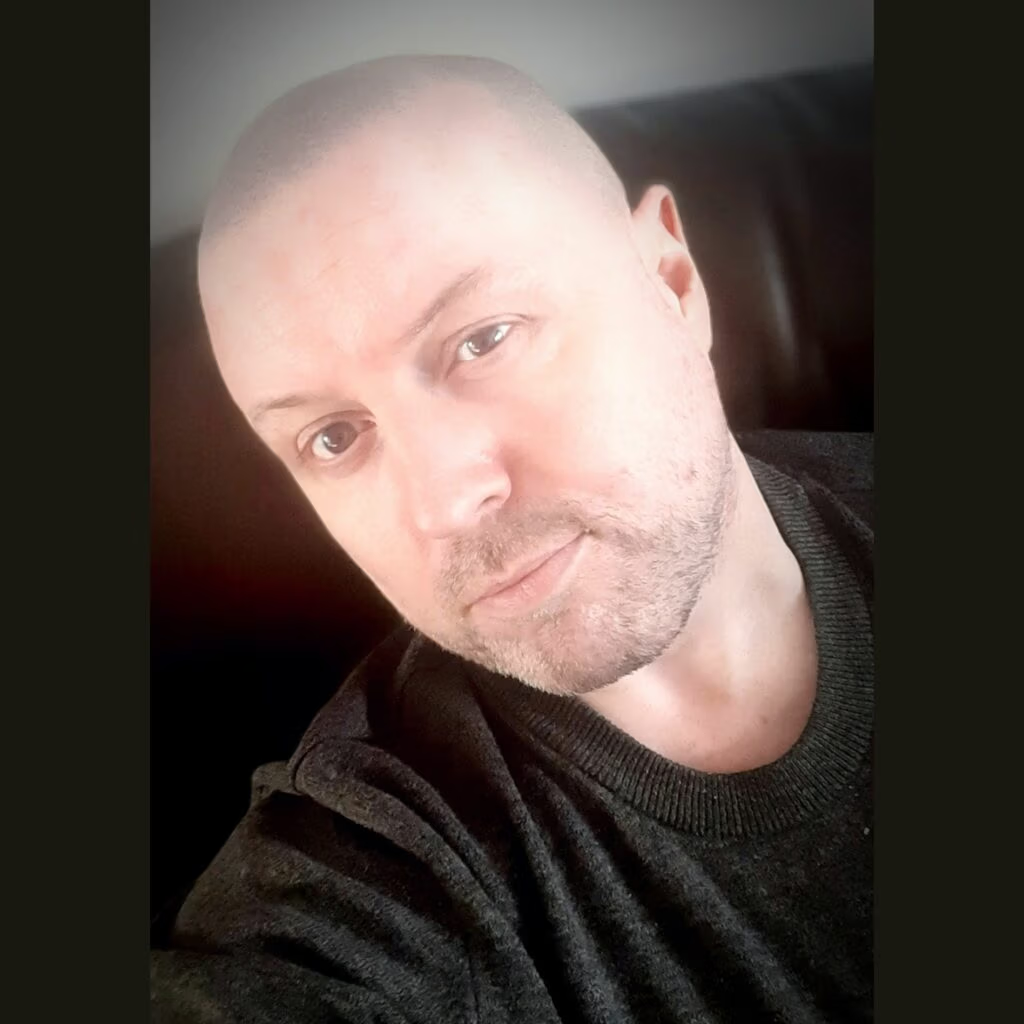
Included are some stock photos of the equipment & techniques I used but the other picture is of me after my treatment last year!
One Response
Keep at it.
Even 15 years after surgery you can make progress.
It is a daily commitment.
Go fo it.